Starbucks Diversity Training Exposes Bias…About PR

There has been a lot of froth surrounding the decision by Starbucks to close for part of today to offer “diversity training” to its band of barristas in 8,000 stores.

The move comes after a well-publicized incident where two black men at a Philadelphia store who hadn’t bought anything used the restroom and were arrested.

There’s much to discuss about the incident from a diversity as well as retail policy perspective. But there is another level of bias here, not against a particular race, but against the profession of public relations.

Many media accounts I’ve read include some quote or comment that the closing of stores to do diversity training is….”just PR.”

The use of the diminutive and pejorative adjective “just” with the name of the profession is a bias of its own. It implies that ALL PR is minimal or not genuine. Attribution theory would say that people don’t judge by a person or organization’s actions as much as they do by speculated reasons for them. That’s what’s going on here. People assume the ONLY reason Starbucks is doing this is to cover a bad incident.

This kind of dishonest stereotype of the PR profession by the news media goes back to its emergence in the 1920s. (See my article on the subject). One would think that journalists who criticize PR professionals for being less than complete with the truth would endeavor to demonstrate the appropriate tone with their coverage of PR.

But we don’t know that for sure. It could be a genuine response. And it could be fundamental PR, not “just” PR. Consider:

1. It’s about maintaining brand reputation. In open letter full page ads today, on its web site and in other tactics Starbucks CEO shares his vision when launching the company that its stores be a ‘third place” between home and work where all are welcome. The training is an attempt to return to that culture and maintain the atmosphere that was as much a part of its culture as the coffee. People who assume otherwise confuse image with reputation.

2. It’s classic crisis communication. The various crisis communication theories advise doing what goes against what people unschooled in PR would suspect. In this case, Starbucks was quick to admit a problem, own it, apologize, and move to rectify it.

3. PR is more than media relations. While much publicity has occurred, Starbucks is acting on the premise that most with broad experience in PR realize–it’s about building and maintain mutual relationships with all publics, not just managing the press. Coverage of this incident is secondary. Starbucks wants patrons and community members to have a positive relationship with each store. They are working toward this long after the story fades in the media.

4. It’s about stakeholder theory. Other novices and those who don’t bother to learn what PR really is would suspect it’s core purpose has to do with customers. But this is a classic case of balancing the often competing interests of multiple publics–customers, stockholders, employees, and the community or public opinion. Allowing anyone to use the bathroom, whether paying customer or not, sounds generous. But  some customers have complained that the flow of non-customers in and out to use the toilet will be disruptive. Starbucks is working to handle a real diversity issue while keeping in mind the cost of closing for a half day and maintaining relationship with paying customers and keeping barristas happy and on message.

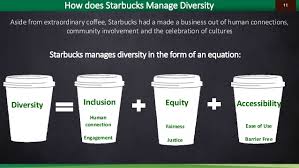
5. It  really is about diversity. Anyone who knows anything about the PR profession would have to know about the heavy emphasis on diversity in the last 10 years. It’s reached a point where it is not a bend to public sentiment but it is a critical business imperative to be competitive in everything from recruiting talent to attracting investment to sales.

So I’d watch the story and it’s fall out over the next few days and weeks. Anyone who says what Starbucks is doing is “just” PR just doesn’t get it. Or worse, they’re just a journalist.
Advice on Nonprofit Annual Reports

A few months ago, I spoke to a group of nonprofit executives about the types of information nonprofit donors prefer. You can read more about that in a previous blog post.

I received an email following that presentation asking for some advice about whether or not to do an annual report. I thought I’d share my response here.

First of all, why should a non-profit organization do an annual report? They are not required by the Securities and Exchange Commission (SEC) as they are for public companies. This could be seen as a good thing if you’ve ever read the SEC’s instructions for an annual report, called a 10K in government parlance.

But many nonprofit organizations do annual reports anyway, and with good reason. One reason is simple accountability. Donors who contribute money in various amounts all want and deserve to know how well it was spent, and what was the return in terms of organizational mission. Staff, recipients of services, government agencies, and other publics may also expect to know what the organization did in the past year.

The annual report also serves as a fine promotional tactic and should be seen as a strategic aspect of the organization’s ongoing communication plan. Donors feel compelled to give again–or for the first time–when reading about accomplishments and seeing who else gave. Community members have a deeper understanding of the organization as opposed to just name recognition. This can lead to referrals for services and partnership opportunities as well as support.

The woman who emailed me also asked if an annual report could replace their newsletter. That’s a possibility, but you lose some frequency since annual reports only come out once a year. Another option is to make the annual report the fourth issue of a quarterly newsletter. It saves the money of an additional publication but maintains top-of-mind communication with key audiences and fulfills the purpose of an annual report. It could be an insert in the newsletter or a special issue format.

So then the question becomes, what sorts of content should you put in a nonprofit annual report? Here’s a suggested list:

  • First, have a theme each year that is told both in words and graphically. The theme should tie in to the organization’s mission generally but also be specific to unique success in the past year or a vision for the year(s) to come next.
  • Include a letter  from the president and/or board chair that reflects on the past year, looks ahead, and incorporates the theme. Go for personality and creativity as opposed to perfunctory, pedestrian language.
  • Include a list of board members and their affiliations as well as staff with titles. This is a form of transparency, but also personalizes the organization and provides implicit endorsement.
  • Donor profiles. Telling the stories of donors, including who they are and why they give, serve as both grateful recognition and powerful testimonials to motivate repeat and new giving.
  • Success stories. Nonprofits don’t exist to just gather funding, they have a mission. Telling personal stories about real people who benefited from that mission puts a face on the cause, treats the recipients of services with dignity, and provides all readers a deeper and more  accurate understanding of the organization’s work.
  • Finally, include the financials. This would include both sides of the ledger. For donations received, name donors (with permission) and possibly put them in tiers or categories of giving to show that all sizes of gifts are  welcome. If gifts were earmarked for specific projects or programs, show that also. Then, show how money was spent by category of mission, including administrative costs. This is again both a form of transparency and good promotion to show the need, responsibility, and diversity of organizational assets.

A good idea is to include an envelope or web address for additional giving. Track the responses that come from it, as well as comments from key publics for future reference.

What Makes for High-Performing Corporate Communication Teams

An issue of concern for any professional communicator is how well they are performing, but performance has to be considered not just in metrics of communication skill proficiency, but how well the communications functions contributes to the overall organizational goals.

Over the past year and a half I looked into this issue in a research project with Mark Bain, a top communicator in his own right who now does consulting as owner of upper90 Consulting. We conducted a series of phone interviews and then a survey of top Chief Communication Officers (CCOs) at top companies and organizations around the country. This resulted in a an article, “High-Performing Corporate Communications Teams: Views  of Top CCOs,” published in the latest issue of PR Journal (free online–a real benefit to professionals!). I’d encourage you to read it, but here are the takeaways:

From the interviews, these common themes emerged:

  • High-performing teams are adaptable;
  • High-performing teams are collaborative;
  • High-performing teams possess specific and appropriate forms and levels of expertise;
  • High-performing teams are analytical;
  • High-performing teams demonstrate leadership across the organization;
We also found that there are several impediments or barriers to high performing teams. One is a lack of clarity from top management about the roles, objectives, responsibility and accountability of each functional unit in an organization. This can lead to turf guarding or fighting over who owns what, such as communications and IT fighting over digital responsibilities, and other internal tensions that slow performance. 
Poor leadership, which relates to poor culture, were cited as other impediments to performance. Structural and organizational issues also were mentioned often, including the “silo” effect of internal departments or varied geographic locations not talking fluidly with each other. Finally, a lack of CEO understanding of and support of the communications function were a common problem indicated by top CCOs, as was an external environment of rapid change.
Taking the input from the interviews, we conducted a large scale survey to determine, among other things, what top CCOs valued as the key factors driving high performance in corporate communications teams. Of 20 factors that drive performance presented, eight had the highest value according to respondents. The top factors in order of importance by mean score are: 
  • function’s work is aligned with business goals;
  • people in the function collaborate effectively with others;
  • the communication function adapts quickly to change; 
  • demonstrate respect for others;
  • culture that allows people to do their best work;
  • people in communication understand the company’s business; 
  • a clear role in the company;
  • CEO support of the communications function; 
  • interpersonal skills.
It’s also interesting to look at common perceived impediments to high-performance of communication teams. Here, seven factors emerged:
  • A CEO who doesn’t value her/his employees;
  • lack of alignment around strategy;
  • unhealthy work culture; 
  • inability of organization to adapt to change; 
  • lack of clear vision for the organization; 
  • difficulty hiring and retaining talent; 
  • a silo approach to working in the organization. 
I’d encourage taking a look at these and seeing if they mirror the situation in your organization. Or use the results in goal setting as you counsel your CEO or other top management to develop the factors that drive performance. It will improve not just communications, but, since communication and public relations ARE a management function, it will improve the performance of the entire organization in terms of meeting strategic goals.

Definition of PR More Than Nuance

I recently read an article in a local business publication about public relations professionals adapting to social media. In an early paragraph, the article was framed by pointing out that public relations firms “are charged with portraying the image of its clients in an optimistic light to its targeted audience.”

Ugh.

I reached out to the young reporter, new to the publication and to a beat that includes public relations. It will be great to have more stories explaining what public relations professionals do to an audience of business professionals in other disciplines. I’m all about educating people on public relations.

But that’s why I reached out to the reporter. As an educator, I said, I don’t have a hidden agenda or anyone I’m representing.  I just want to represent the profession of PR, and help her coverage by providing a more complete, honest and ethical definition of it. She responded with thanks, and I hope she’ll call on me in the future.

I also spoke with some professionals about the article at an event shortly after it was published. One, who came into PR  from another field, seemed indifferent and said “Look, I work in the field but I don’t understand its nuances like you do.”

But this is more than nuance. Journalists and professionals need to have a proper conception of what public relations is. Without that, the frame and foundation will lead to shaky assertions and unfortunate conclusions about what public relations is, and what it is not. We’ll have media portrayals that stereotypically minimize or demonize the profession. We’ll have people doing PR incompletely and unethically, giving more fodder to the misperceptions of the field.

I’m not some persnickety academic. I know many professionals who agree passionately about this. Of course people have debated the definition of public relations for years, but we left behind “image” and “optimistic light” in the 1920s. I know this from my own PR history research, including “First Impressions: Media Portrayals of Public Relations in the 1920s.” 

Here are some points about the developing definition and practice of public relations over the years that need to be understood today by both journalists who cover the field and people who aim to practice it:
  • Ivy Lee, an early practitioner, wrote in 1906 a “declaration of principles” and gave an address in 1925 to journalism educators called “Publicity: Some of the Things It Is and Is Not” asserting that public relations is honest and has a responsibility to the people beyond that of the client. 
  • Arthur W. Page was an early practitioner and the first to hold a vice president of public relations position (at AT&T in 1927). From his many speeches and writings other professionals gleaned a set of 7 principles. These are touted today as the Page Principles by the Arthur W. Page Society named in his honor. I often tell my students to memorize the first two–tell the truth and prove it with action. This directly contradicts the old and suspect “positive light” definition.
  •  Jump ahead to 2012 when the Public Relations Society of America re-defined the field as “Public relations is a strategic communication process that builds mutually beneficial relationships between organizations and their publics.” Read about the definition process online.
So, rather than equate PR with “image”, which can be created and deceptive, we should stress that PR is about “reputation” which must be earned and is based on actual public experience and is inherently honest. Rather than talk about “positive light” we should talk about relationships between organizations and their stakeholders that benefit all. PR is about more than “reaching publics,” it is about dialogue, listening and what we call “two-way symmetrical” communication. It is way beyond mere publicity. It is about counseling management not just on what they say, but what they do.
The definition of a field is not nuance. It is vital. It is the philosophy that informs and guides practice. It is the difference between being a mere practitioner and being a professional.


Understanding Nonprofit Donors’ Preferred Types, Qualities and Sources of Information

I was happy to speak to a sold-out crowd of 60 nonprofit professionals last week about how to reach out to potential donors based on the information they are interested in, not just what nonprofit organizations want to send them.

Discussing nonprofit donor information preferences at
the GVSU Johnson Center for Philanthropy.

The presentation was at the GVSU Johnson Center for Philanthropy, as part of its “Brown Bag Lunch and Learn” series.

I was sharing data and information from my chapter “Nonprofit Financial Communication: Donors’ Preferred Information Types, Qualities and Sources.” The chapter is included in the recently published Handbook of Financial Communications and Investor Relations. The study of the information nonprofit donors seek is an extension of my research on individual investors when they are considering purchasing a stock: “The Value of Public Relations in Investor Relations: Individual Investors’ Preferred Information Types, Qualities and Sources”.

Attendees were interested in the results of my survey of a sample of 173 donors to a large community foundation. The book chapter includes a lot of statistical analysis of results (which can be read if you acquire the book via the link above). In the presentation I hit the high notes of practical take-aways about the types of information (i.e. content), qualities of information (ranging from length to tone and more) and the sources of information (meaning the people or communication tactics). The brief results are as follows:

Top preferred types of information:

  1. Mission of the organization
  2. Impact of the organization and the donations received
  3. Where money is spent by category
  4. Location of organization (local, regional or national)
Top preferred qualities of information:
  1. Personalized appeal
  2. Focused on organizational need
  3. Stressing a specific giving opportunity versus general gift to organization
  4. Focused more on results of organizational work vs its need for support
Top preferred sources of information:
  1. The organization’s web site
  2. The organization’s newsletter
  3. Other donors (i.e. word of mouth)
  4. The organization’s annual report
  5. Conversations with staff of the organization (ie interpersonal)
It is interesting to note that the news media does not rank highly in the responses of donors as a source of information for donors to nonprofits. Media relations and publicity are helpful, but it turns out not the most persuasive form of communication strategy when trying to gain attention and raise funds. The news media was valued, but came in after other sources of information when donors were asked what was the “most useful” source of information and presented with people and organizations, not tactics. Their response in order of preference was:
  1. The nonprofit organization itself
  2. Other donors
  3. A charity expert (such as a financial planner)
  4. The news media
When so many people confuse “PR” for publicity, it is important to note that the strategic communications and relationship building aspects of public relations–the real root of the profession–are most effective in the minds of donors.
In my study, and to a degree in my Johnson Center presentation, I went over the association of variables. In other words, when donors are looking for specific types of organizations, they look to specific sources. I also explained that when they want certain qualities of information they favor specific sources. These are illustrated in the latter slides in my presentation, which is available on my Slideshare page.
The room full of nonprofit pros had a good variety of questions and observations. In the end, the discussion showed that public relations, and nonprofit public relations and fundraising, is far more sophisticated and strategic than “getting the word out” or “just raising awareness.” Nearly everyone said they left with something specific they could apply back at the office, which made me more motivated when I got back to my office.