
Newsletters get hot for media relations and public relations

Several years ago in a media relations class I teach, a student asked me about sending news releases to newsletters. At the time I said generally not, because a newsletter is a house organ or owned media only interested in their own organizational news.

Fast forward to 2021. Newsletters are not only emerging as a few exceptions but a robust aspect of news outlets, as blogs have been for some time.

One sign of this reality is that Muck Rack has added newsletters and their authors to its media database used by legions of public relations professionals.

A big reason for this trend is that well-established journalists from name brand and bonafide outlets are striking out on their own in an act of “entrepreneurial” journalism. Authors ranging from Andrew Sullivan to Ben Shapiro have done this, as have a trio of former Politico reporters. And this is not just a trend among national media, as local journalists are launching newsletters as well.

Of course it hasn’t taken long for this trend to be aggregated online–the current hot spot is Substack. This is a reason for PR pros to look into pitching these newsletter journalists, and also to consider starting their own Substack or owned platform newsletter as another form of brand journalism.

A way to think about such newsletters is the way PR pros have had to learn to think about bloggers and YouTubers and other social media posters. There are professional journalists using these new platforms and gaining audience of mass reach in a new way, as well as new players reaching new and niche audiences. They all need content, sources, facts.

So if a student in my media relations class asks about newsletters, I hope it’s a specific question in response to my bringing it up as another type of media contact and pitch opportunity.
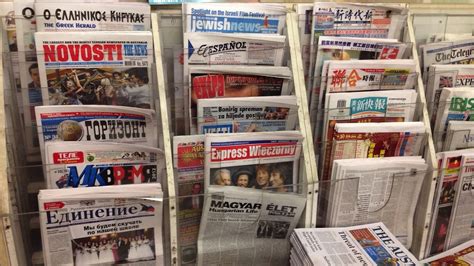
DEI, Niche Media and Public Relations

For years I have told public relations students in my media relations and other classes that they need to pay attention to what has been called minority media. There are two reasons for this: 1) such media can serve as important outlets and a way to reach these specific populations with appropriate news, and 2) they are great sources for research and environmental scanning of populations we can’t assume are all the same. With the prevalence of corporate attention to diversity, equity and inclusion (DEI), this second reason may be paramount now.

These are the publications and broadcast outlets that focus on news about and for Black, Hispanic and other populations. Typically these media are at the local level and serve specific populations by geography as well as race or ethnicity. But in the past month I have noticed more national scale minority media outlets that should be on the radar of public relations professionals for the same two reasons I mention to my students.

Here are three such outlets:

  • Tribal Business News–At first I thought this would be another West Michigan media outlet focused on Native American news. We have a number of tribal groups in West Michigan, and the October 1 launch of this publication was made by MiBiz, a regional business publication. But on reading the launch announcement I realized this would be national in scope. This makes sense because as the launch announcements notes, the tribal economy is a $130 billion economy and worth attention. The online publication will offer a print version soon as well.
  • Latinex Files–In a similar fashion, the Los Angeles Times has launched this niche newsletter focused on a sizable segment of the US population. Nearly a fifth of the US is Latino, the Times notes in its launch of this new content vehicle last month.
  • Axios from Tel Aviv–Axios is an alternative online news source that emerged several years ago, offering a variety of email newsletters, a web site, and an app. It’s value is short briefs of news by category with “what is means” application summaries for busy news consumers. It recently launched this newsletter all about Israel, an important nation for economic as well as geo-political reasons. Axios also offers a newsletter all about China.

There may be other examples of national niche media outlets out there. Share in the comments if you want. It is an interesting and what seems to be a necessary trend in media that help PR professionals and others stay informed about and find opportunity with large, significant and sometimes overlooked segments of society.

‘Media Relations Writing’ Book Available Now

Penning Kindle Front CoverFor two reasons I have written my own textbook.

First, students and I were not happy with the variety of textbooks about public relations, PR writing or media relations writing available now from academic and other publishers. They didn’t find them useful, and they weren’t reading the assigned book.

Second,  I am often asked by professionals–in public relations or in other roles who sometimes need to write a press release or do some other form of media relations—if they can pick my brain, have me give them some advice, or otherwise tell them about how to work with journalists.

So I turned my lectures into a book that could be useful in a college classroom, a PR department at any organization, or as a guide for anyone working in other professions who nevertheless have to try to gain publicity for something and they are not sure how.

The result is “Media Relations Writing: A Guide for PR Pros (or anyone who just wants publicity). Yes, it’s a long title and subtitle but it covers the market.

I’ve been field testing it on students in my media relations writing course this semester. They are reading it, and they like it for its clarity and practicality. They also like the price–free!

For others, the price is also right. It ranges from $4.99 to $14.99 depending on format (e-book or paperback) and the platform. The book is out now on Amazon, Barnes and Noble, and Apple Books.

To find out more, see the books page on my Penning Ink website.

Who Should Be Your Spokesperson?

imagesJust recently, a client of mine was in the news. The story was not something we had pitched, it was just some journalistic enterprise stemming from a public meeting.

It just so happened that the CEO and COO were both across the country at a conference. So the VP of Finance took the call from a reporter and answered the questions. This was appropriate, given that the story was financial in nature. The reporter needed to verify and clarify some numbers and then ask for a quote. The resulting article was clear and positive and the finance expert had gained some media exposure.

I bring this up because people often wonder who their client or organization’s spokesperson should be. Some assume it should always be the CEO. Others think that’s the role of the PR person. Often in times of crisis it is a lawyer stepping up to the microphone (not always a good idea because of the implications of a lawyer speaking looking defensive as opposed to transparent).

The reality is, the best spokesperson depends on the subject matter and context.

When I did media training several times over the years for the client I mentioned, I always did it for not just the CEO but everyone on the management team, including finance, human resources, and other specific business area management leads. This is because everyone should be ready to give a clear interview that is both helpful to journalists and consistent with company objectives.

That is the purpose of media training–to make sure everyone who might do an interview is not mystified, afraid of, or antagonistic toward the media. They should know how to speak for print, radio, or TV–live or recorded–in a way that provides accurate and useful information that sounds genuine and not generic jargon.

In previous PR jobs where media relations was the focus, I often connected reporters to people other than myself for interviews. The idea was to shine a light on more people in an organization to show its depth and diversity, but also to have more insightful comments closer to the subject at hand. Reporters were always appreciative of the access to sources most suited for the story.

Here are some simple considerations for setting up a spokesperson on a given story:

  • authority/accountability–who has the power or made or will make a decision relative to the story? This could be the CEO, but it could be another member of management. Think in terms of who the public would want to hear from to justify themselves for the actions to be reported in the story. (This also is something to think about if debating whether someone from a PR agency or someone in-house should be the spokesperson for a story);
  • knowledge–who can really answer a reporter’s questions in detail in a way that can enlighten and educate an audience? This may be a scientist, a teacher, an accountant, an engineer, a safety officer or anyone who deals with the subject of a reporter’s story daily as the focus of their job;
  • accessibility–who is available right now or very soon? Reporters work on deadlines. Sometime there is a long lead time to set something up, but often the story is for tonight’s broadcast or going up online for the next app or email update. In this case, the PR professional may be the one to speak for the sake of efficiency.


Why the Return of Paid Content Will Be Good for PR

For years I have been watching the economic decline of journalism. The cycle has gone like this:

  • new media emerge in droves because of the digital and social media opportunities;
  • in a rush to keep up with digital and social expansion and competition, legacy print media put their content online for free;
  • subscribers, preferring free to paid, and being overwhelmed with choices, drop subscriptions and use social platforms, RSS feeds, news aggregators and so on to access news;
  • the competition intensifies and to stay economically viable (i.e. more clicks) journalism quality suffers and goes solid reporting of important news is edged by click-bait, market-driven, entertainment value;
  • good journalists accept buy-outs and publishers seek “cheaper content” by aggregating, leveraging content from broader sources (witness MLive consolidating newsrooms and its universal desk so the content is very similar in Muskegon, Detroit, Grand Rapids, or how similar Detroit Free Press and USA Today look ) and gaining free content from bloggers, user-generated content and other “innovations” (witness the GVSU student who was paid in swag for her popular Buzzfeed quizzes);
  • smaller newsrooms put out less serious news, people keep getting it for free, favoring a stream of articles from multiple sources vs a deep read of select single sources;
  • with lower subscription and readership numbers, advertising dollars continue to decline, offering even less revenue to put into the “product” of must-read news.

There have been some alternative models. The New York Times offers 5 free reads per month and then a given IP address will have to subscribe. Others, like the Wall Street Journal and the Economist, offer some article free but premium articles are dangled out there with a notice that they are for subscribers only.

Other publications have emerged in a non-profit or donation model. In Michigan, many quality journalists from legacy media have moved to such publications such as the Bridge (“If you care about Michigan, please support our work”) or more recently Michigan Advance (heads up–I’ve invited editor Susan Demas to speak at GVSU and my colleagues are putting together an event for March 29 that will include a panel of journalism, advertising, public relations, and communications faculty including myself).

There is also a trend of nonprofits, businesses, and government offices becoming their own media outlet in the form of a news bureau or online newsroom that goes direct to public. A former student of mine who works for a state-wide association just asked me about this. I have written about this pointing to some examples on my blog previously–here’s a collection of prior posts on the subject.

But recently I noticed more media, from individual outlets to group conglomerates, drawing a line in the media economics sand and announcing a return to paywalls and subscriptions for their content. The latest example of this is a decision by Conde Nast for its fleet of publications. Some see the move as a bad one, but it is a trend to watch nonetheless.

Here’s why this is good for advertising and public relations.

  1. Survival of media. This will reverse the downward cycle I posed above. I heard a billionaire say once that if something is free, it has no perceived value. If people have to pay, publishers will have to put out quality reporting–meat, not candy. There is a hunger among the intelligent public for a less frantic media landscape, for news that is credible and quality. This will help good media–whether old or new–to survive.
  2. Communication environment. We should want good journalism to survive, first as citizens, and secondly as advertising and public relations professionals. Programmatic and targeted advertising made some economic sense, but it can lack qualitative intuition, creativity, and ethics. A recent study shows that most people don’t want tailored or targeted ads. Audiences who pay for content are more attentive to both paid and earned media (or ads and editorial content). And our ads and article pitches will exist next to good and not questionable content, which other studies shows matters to readers.
  3. Dedicated and aggregated audience. Digital media has been about both reach (quantity) and targeting small audiences of like minds and relevant interests. But returning to paywalls changes the equation. It may result in lower reach as not all current readers will subscribe. But those who do subscribe will be in one place, read each issue and multiple articles, have a natural interest in content and likely a net disposable income enabling them to respond to ads.

There are some considerations to work out as journalism returns to paywalls. One is whether subscribers–and maybe only subscribers–will be allowed to share content. Another is whether publishers will offer headlines and article summaries, or a handful of free articles each issue as a loss leader to draw subscribers. We’ll see. We are in what economist Joseph Schumpeter would call a “gale of creative destruction” in the media industry. What looks dire could emerge as a very good move forward.

I for one am eager to see what good things paywalls do for journalism, content, citizens and the ad and PR industry.